
A Zhitro Bardo & Death Retreat
With Shar Khentrul Jamphel Lodrö Rinpoché and Yeshe Wangmo
October 1 - 4, 2027
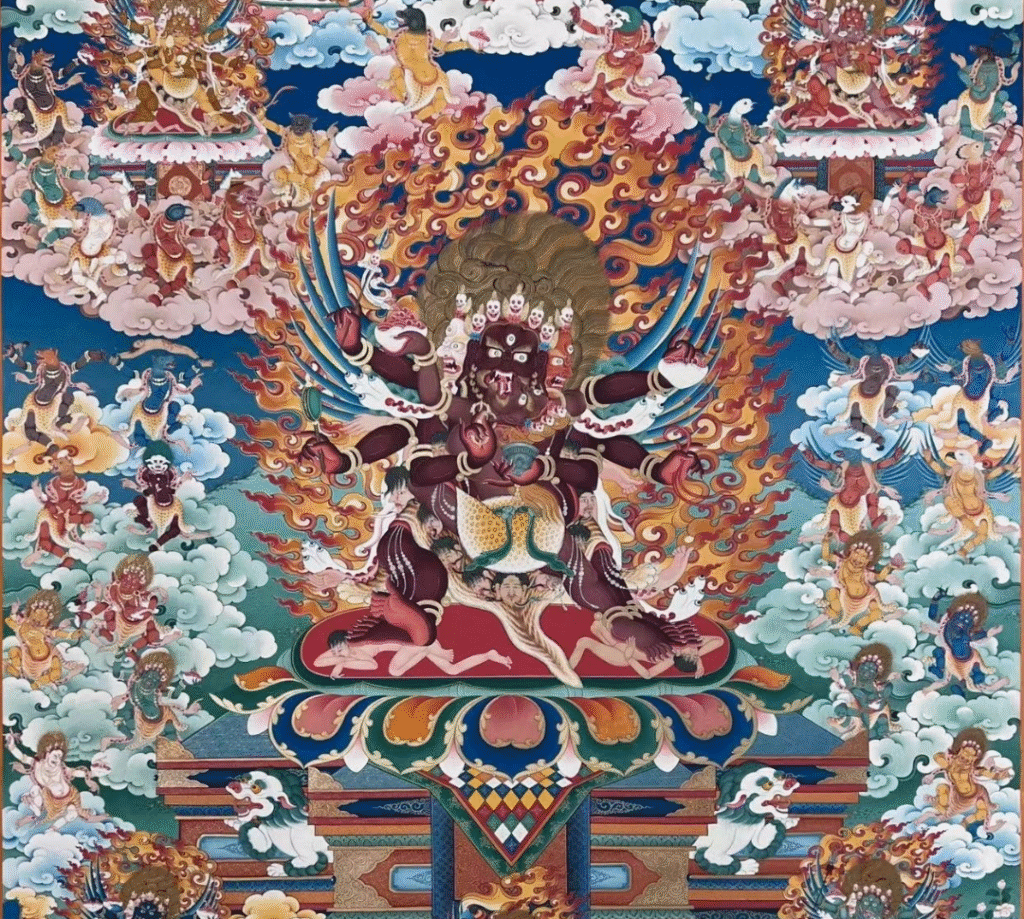
Death is the one transition every one of us will experience, yet few people are taught how to prepare for it or how to support others when it comes. Whether you are caring for aging parents, accompanying someone with a terminal illness, grieving the death of a loved one, preparing for your own future, or simply wishing to understand one of Buddhism’s most profound bodies of teaching, this retreat offers practical guidance rooted in authentic Vajrayana lineages.
Over four days, Shar Khentrul Jamphel Lodrö Rinpoche and Yeshe Wangmo will explore the bardos—the transitional states experienced throughout life, death and rebirth—and the extraordinary opportunities for awakening they contain. Drawing from both the Nyingma Zhitro tradition revealed by Karma Lingpa and the profound perspective of the Jonang Kalachakra tradition, the retreat brings together complementary teachings that are rarely presented within a single program. Participants will learn how to prepare for death, care for someone who is dying, support loved ones after death, and recognize the spiritual possibilities present within every transition. Rather than treating death only as something to fear, these teachings reveal how preparing for death can help us live with greater awareness, compassion, confidence and purpose today. No previous Buddhist study or empowerment is required.
What You Will Learn
During this retreat, participants will receive teachings and practical guidance on:
- The bardos of waking, meditation, dreaming, sleeping, dying and rebirth
- The Nyingma Zhitro and Jonang Kalachakra perspectives on death and the intermediate states
- How to prepare spiritually and practically for your own death
- What to do while someone is dying
- How to support someone immediately after death
- Practices for the traditional forty-nine-day bardo period
- The peaceful and wrathful deities and their relationship to awakened nature
- Opportunities for recognition and liberation during death and the bardos
- Prayers and practices for deceased family members, teachers and ancestors
- Kalachakra teachings on phowa and the transference of consciousness
- The six traditional methods of establishing a connection with liberation through sight, sound, smell, taste, touch and wearing
A Rare Opportunity to Receive the Karling Zhitro Empowerment
During the retreat, Shar Khentrul Jamphel Lodrö Rinpoche will bestow Karma Lingpa’s Karling Zhitro Hearing Liberation Empowerment, one of the most profound and treasured transmission cycles of the Nyingma tradition.
Although Khentrul Rinpoche is internationally known as a master of the Jonang Kalachakra tradition, his Dharma journey began within the Nyingma tradition.
He received extensive Nyingma training from an early age, and practices connected with Guru Padmasambhava—including the Karling Zhitro cycle—were an important part of his family’s spiritual life and the traditions in which he was raised. Throughout his years of study with accomplished Nyingma masters, Rinpoche received this empowerment numerous times and maintained a deep personal connection with these teachings.
The Karling Zhitro cycle is one of the great Vajrayana treasure teachings, or termas, of the Nyingma tradition. It was revealed by the renowned fourteenth-century treasure revealer Karma Lingpa after having been concealed centuries earlier by Guru Padmasambhava.
This cycle forms the basis of the famous Bardo Thödrol, widely known in the West as The Tibetan Book of the Dead. For generations, its teachings and practices have guided practitioners through the processes of dying, the bardo and rebirth.
The One Hundred Peaceful and Wrathful Deities
The Tibetan word Zhitro means “Peaceful and Wrathful.”
It refers to an assembly of forty-two peaceful and fifty-eight wrathful deities who are described as appearing during the bardo following death.
Within the Zhitro tradition, these deities are understood not as external beings separate from us, but as enlightened expressions of our own awakened nature.
The peaceful deities initially manifest as radiant expressions of wisdom and compassion. If these appearances are not recognized, the wrathful deities arise—not as punishments, but as powerful and fierce manifestations of awakened compassion intended to cut through fear, confusion and clinging.
Through receiving the empowerment and becoming familiar with these deities during life, practitioners create the causes to recognize their appearances during the bardo as expressions of their own Buddha nature.
What might otherwise be experienced as a frightening or bewildering transition may then become a profound opportunity for recognition and liberation.
Karling Zhitro Nyedren Purification and Liberation Puja
As part of the retreat, Khentrul Rinpoche will perform the Karling Zhitro Nyedren Purification and Liberation Puja, a profound ceremony dedicated to benefiting both the living and the deceased.Through prayers, offerings, mantra and ritual practices, a connection is established between those who have died and the wisdom and compassion of the One Hundred Peaceful and Wrathful Deities.
The puja is traditionally performed to benefit beings who may be wandering in the bardo, as well as those who have already taken rebirth. It creates auspicious conditions for the purification of obstacles, the accumulation of merit and the eventual realization of awakening. Within the tradition, the benefits of this practice are understood to extend to the deceased regardless of how long ago they passed away. The ceremony is also a meaningful way to express gratitude toward our parents, ancestors, teachers and all those from whom we have received kindness. For this reason, it has long been regarded as a powerful practice for remembering and repaying the kindness of previous generations.
Participants will be invited to submit the names of deceased family members, friends, ancestors and teachers to be included in the ceremony.
Understanding the Bardos
The Tibetan word bardo means “intermediate state” or “in-between state.” Although the term is commonly associated with the period between death and rebirth, Buddhist teachings describe multiple bardos occurring throughout our lives.
Every bardo is a transition. Because our ordinary habits and identities may become less fixed during transitional states, each bardo contains unique opportunities for spiritual recognition.
The Karling Zhitro teachings focus especially on the transition between death and rebirth. According to the Bardo Thödrol, the One Hundred Peaceful and Wrathful Deities gradually appear during the traditional forty-nine-day period following death. The purpose of these teachings is not merely to acquire information about what may happen after death. Their deeper purpose is to become familiar with the nature of mind and its appearances while we are still alive.
Through empowerment, meditation, prayer and repeated practice, we cultivate the capacity to recognize appearances as inseparable from awakened awareness. In this way, preparation for death becomes inseparable from the path of awakening during life.
Practical Guidance for Life, Death and the Bardos
This retreat is not only about what happens after death. It is about learning how to live more consciously now. Many people find themselves unprepared when a family member or friend begins to die. They may not know what to say, what to do, which practices to perform, or how to create a peaceful and supportive environment.
The retreat will provide practical guidance for accompanying someone through the dying process with compassion, clarity and respect.
Teachings will address:
- How to prepare for your own death before a crisis occurs
- How to speak with someone who is dying
- How to create a calm and spiritually supportive environment
- Which prayers and practices may be performed near the time of death
- What to do immediately after someone has died
- How the body may be treated according to Vajrayana guidance
- How to continue supporting someone during the forty-nine days after death
- How to dedicate merit and make offerings on behalf of the deceased
Why These Teachings Matter
Modern society often hides death from view.
As a result, many people are left uncertain about how to respond when illness, aging, grief and death inevitably enter their lives. Even those who have a spiritual practice may discover that they have not prepared for the practical and emotional realities of dying.
Vajrayana Buddhism approaches death differently.
Rather than viewing death simply as an ending, it understands death as a profound transition in which every appearance may become an opportunity for awakening. It is actually one of our best opportunities for liberation. By preparing now, we can cultivate wisdom and confidence for ourselves while becoming more compassionate and capable sources of support for our families, friends and communities. Whether death comes decades from now or unexpectedly tomorrow, the preparation begins today.
Liberation Upon Death Bardo Box
Included for In-Person Participants
Each in-person participant will receive a Liberation Upon Death Bardo Box containing sacred supports associated with six traditional methods of establishing a connection with liberation:
- Liberation through sight
- Liberation through sound
- Liberation through smell
- Liberation through taste
- Liberation through touch
- Liberation through wearing
These objects are traditionally used to create beneficial karmic connections for people who are living, preparing for death, actively dying or recently deceased.
Participants will receive instructions on their respectful and appropriate use.
[LEARN MORE ABOUT THE LIBERATION UPON DEATH BARDO BOX]
Who Should Attend?
This retreat is open to everyone. No previous Buddhist study, meditation experience or empowerment is required.
It may be especially meaningful for:
- Buddhist practitioners wishing to prepare for death through authentic Vajrayana teachings
- Anyone caring for aging parents or terminally ill loved ones
- People who work with those who are in their moments of sacred transition
- Students interested in the Bardo Thödrol
- Practitioners interested in the One Hundred Peaceful and Wrathful Deities
- Anyone seeking a deeper understanding of life’s transitions through Buddhist wisdom
You do not need to be a Buddhist to benefit from the instructional teachings. Participants should, however, approach the empowerment, rituals and sacred objects with respect for the Vajrayana tradition from which they arise.
Online Participation
The retreat will also be available online for participants who cannot travel to Menla. You can include names for those you wish to be included in the puja.
Because Vajrayana empowerments and oral transmissions must be received live, online participants must attend those sessions in real time. A recording cannot replace live attendance for receiving an empowerment or oral transmission.
Recordings of eligible instructional teachings will be made available to registered participants through the Dzokden online learning platform after the retreat.
The Liberation Upon Death Bardo Box is included only for participants attending in person.
[REGISTER FOR THE ONLINE RETREAT]
Schedule
Friday, October 1
-
3 – 6 pm Arrival & Check-in
-
6 – 7 pm Dinner
-
7:30 pm Prepartion Teachings on the In-Between (Khentrul Rinpoche)
Saturday, October 2
-
8 – 9 am Breakfast
-
9:30 am – 12 pm Karling Zhitro Hearing Liberation Empowerment and oral Transmissions (Khentrul Rinpoche)
-
12:30 – 1:30 pm Lunch
-
1:30 – 3 pm Teaching on Bardo and Prayers (Yeshe Wangmo)
-
4 – 6 pm Bardos According to Kalachakra and Dzogchen (Khentrul Rinpoche)
-
6 – 7 pm Dinner
-
7:30 pm Teaching on Bardo and Prayers (Yeshe Wangmo)
Sunday, October 3
-
8 – 9 am Breakfast
-
9:30 am – 12 pm Karling Zhitro Puja and Teachings (Khentrul Rinpoche)
-
12:30 – 1:30 pm Lunch
-
1:30 – 3 pm Teaching on Death and Prayers (Yeshe Wangmo)
-
4 – 6 pm Opportunities for Liberation at Death (Khentrul Rinpoche)
-
6 – 7 pm Dinner
-
7:30 pm Six Ornaments of Liberation and Skillful Means for Dying Well (Yeshe Wangmo)
Monday, October 4
-
7 – 11 am Check Out of Rooms
-
8 – 9 am Breakfast
-
9:30 am – 12 pm Final Teaching and Celebratory Conclusion (Khentrul Rinpoche/Yeshe Wangmo)
-
12:30 – 1:30 pm Lunch & Departure
*Please note that the schedule is subject to change at any time.
About the Leaders

Shar Khentrul Jamphel Lodrö Rinpoché
Khentrul Rinpoché spent the first 20 years of his life herding yak and chanting mantras on the plateaus of Tibet. Inspired by the bodhisattvas, he left his family to study in various monasteries under the guidance of over twenty-five masters in all the Tibetan Buddhist traditions. Due to his non-sectarian approach, he earned himself the […]
Learn more about Shar Khentrul Jamphel Lodrö Rinpoché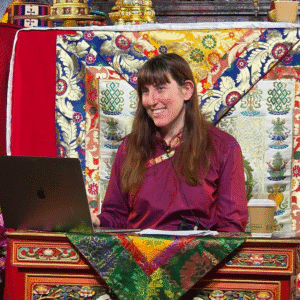
Yeshe Wangmo
Yeshe Wangmo is the co-founder and CEO of Dzokden and a devoted practitioner of the Jonang Kalachakra lineage. She has dedicated her life to preserving, practicing, and supporting the transmission of these rare and precious teachings. Since 2015, she has studied closely with Shar Khentrul Jamphel Lodrö Rinpoche, serving as a senior student, assistant instructor, […]
Learn more about Yeshe WangmoCategories : Livestream, Menla Retreat, Tibetan Buddhism, Wisdom Traditions